Hospitality Interior Design in Morocco: What the Market Expects in 2026
Date
June 5, 2026
Reading Time
3 Minutes
Morocco's hospitality sector is expanding. Studio Noor explores what operators and developers in the region are looking for and what it takes to design spaces that perform.
Hospitality Interior Design in Morocco: What the Market Expects in 2026
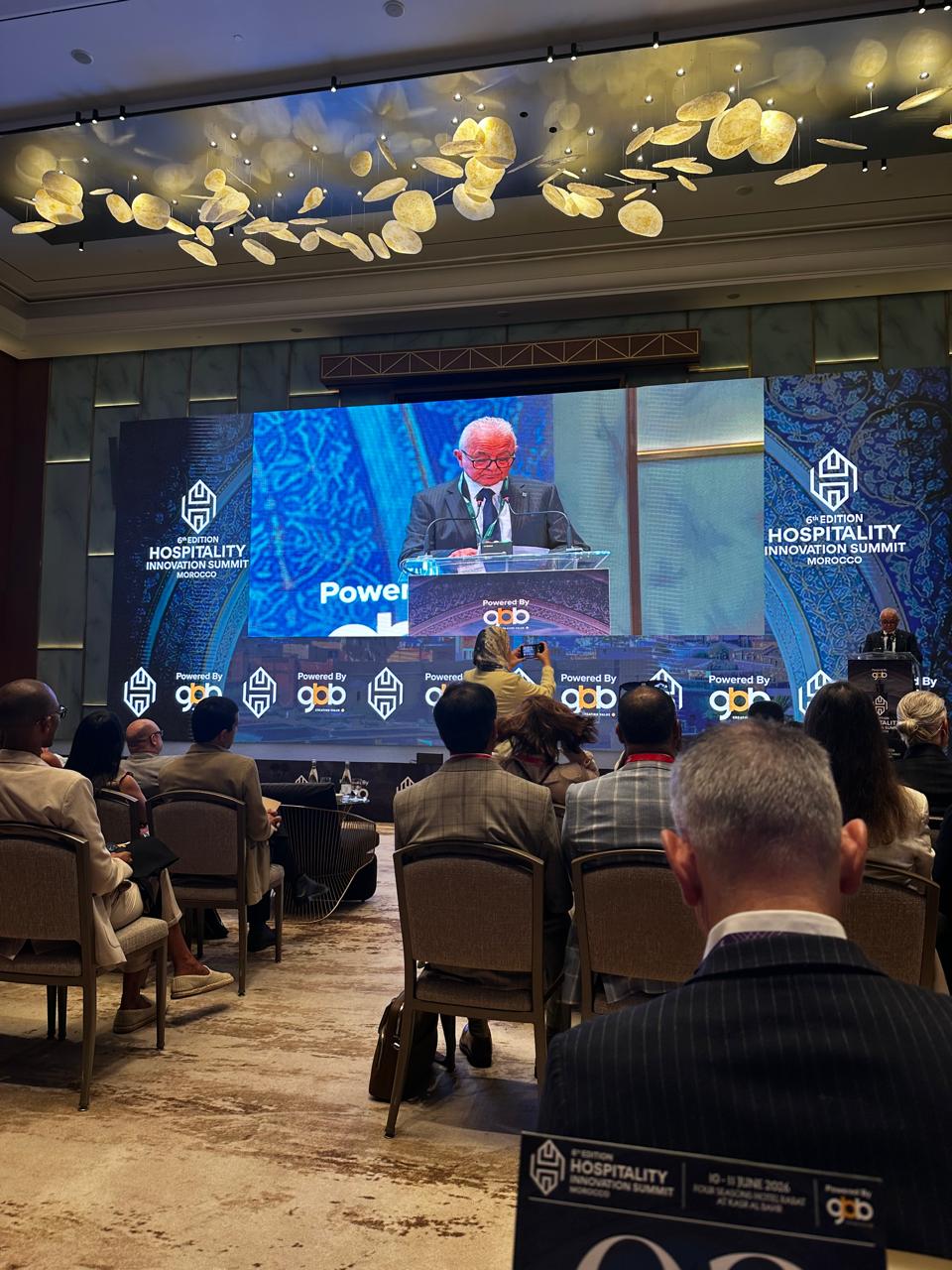
Morocco's hospitality sector has shifted. What was, a decade ago, a market defined by large-scale leisure resorts and a handful of international flagships has become something more varied, more deliberate, and more demanding. New hotels are opening across Marrakech, Casablanca, Agadir, and the Atlantic coast. Mixed-use developments are under construction. International operators including several of the major groups are committing to the market for the medium term. That growth creates opportunity. It also raises the question of what it takes to design well within it. Morocco is not a generic brief. The expectations are specific, the context is distinctive, and the projects that will define the market's next chapter are being shaped by design decisions made right now at the concept stage, before a single tile is sourced or a contractor is engaged. This article sets out what Studio Noor has observed through project work and through conversations at industry forums, including the Hospitality Innovation Summit Morocco about what operators, developers, and investors in the region are looking for from hospitality design in 2026.
A market that is making deliberate choices
The clearest shift in Morocco's hospitality market is not volume it is intent. Developers and operators are not just building more rooms. They are making considered decisions about positioning, about the guest profile they want to attract, and about how design serves those goals. This is partly driven by competitive pressure. The luxury and upper-upscale tiers of the Moroccan market are increasingly crowded, and differentiation through design has become a practical business priority, not just an aesthetic ambition. Properties that look like every other property in the region do not hold rate. Properties that offer something specific a coherent identity, a spatial experience tied to their location, a design language that carries through from arrival to guestroom to F&B command better average daily rates and better loyalty metrics. Investors in the market understand this. The briefing conversations Studio Noor has had in the MEA region consistently reflect an understanding that design is a financial decision, not a finishing touch. The interior architecture of a hotel shapes its revenue per available room from day one of operation.
What bespoke means in practice
The word 'bespoke' gets used loosely in hospitality design. It is worth being precise about what it means in the context of a functioning hotel development. Bespoke design is not the same as expensive design. It is not about specifying rare materials or commissioning custom furniture pieces. It is about a process one in which the design is derived from the specific conditions of a project: its site, its operator brief, its guest profile, its climate, its cultural context, and its construction timeline. The alternative design adapted from a template, or lifted from a previous project with modifications is cheaper to produce and faster to document. It is also more likely to produce a property that underperforms, because the spatial logic was not built for that specific context. At Studio Noor, this distinction is central to how the studio works. The Noor Method the studio's seven-stage design process begins not with a visual direction but with brief definition and project understanding. The concept narrative, when it comes, is derived from that groundwork. The result is design that has a reason for being what it is, which is both more defensible in client reviews and more coherent in execution.
The MEA context: what Morocco shares with the broader region
Studio Noor has worked across the Middle East and Africa for over two decades. Morocco occupies a particular position within the MEA region geographically and culturally distinct from the Gulf, but sharing some of the same design challenges: intense natural light, heat management, a strong local craft tradition that can inform or inform against a design, and a guest population that is increasingly international and increasingly experienced. The MEA traveller in 2026 has stayed in well-designed hotels in multiple markets. They know what quality looks like. They notice when a property is trying to reference its location authentically and when it is performing a version of local culture for effect. The difference between a resort that uses traditional Moroccan tilework because it makes spatial and material sense, and one that uses it because it photographs well is legible to guests and to operators. This is the design challenge that is hardest to resolve with a template approach. It requires genuine engagement with context: research, material specification that reflects supply chain realities, and close collaboration with local craftspeople and contractors. Studios that work in the region only occasionally, or that parachute in a concept without building local knowledge, tend to produce work that reads as imported rather than situated.
Three priorities that recur in Morocco-specific briefs
Based on project conversations and industry engagement, three themes come up consistently in Morocco-specific hospitality briefs at present: Operational fluency alongside design quality. Developers in Morocco are working with complex supply environments long lead times on imported FF&E, limited local suppliers for certain specification tiers, and procurement logistics that differ significantly from European or Gulf markets. A design studio that does not understand these constraints produces documentation that cannot be executed as drawn. The best briefs ask for studios with experience building cost logic and procurement awareness into the design process from the outset not retrofitting it at the end. Cultural specificity without cliché. There is genuine appetite for interiors that reflect Morocco its light, its materials, its spatial traditions. There is no appetite for surface orientalism: zellige on every surface, arched doorways applied without spatial logic, decorative references that do not earn their place. The projects that will age well are those where the cultural grounding is structural, not decorative where the organisation of space, the handling of transition between public and private areas, and the material palette reflect an understanding of how Moroccan spatial culture actually works. Long-term performance, not just opening impact. The hospitality market in Morocco is maturing. Owners and investors are increasingly focused on lifecycle performance: how a property will hold up after five years, how the design wears, how adaptable the spaces are as operator strategies evolve. This shifts the brief away from visual novelty toward design robustness finishes that age with dignity, spatial flexibility that allows programming changes, and FF&E specified for the level of use a busy hotel actually generates.
The role of the design studio
Good hospitality design in Morocco or anywhere in the MEA region requires a studio that can hold two things in balance: a rigorous design process and genuine operational experience. The two are not in tension, but they require deliberate integration. Studio Noor's structure is built around this. Both directors Luc Lejeune and David Hodkinson are personally involved in each project, from brief definition through to construction involvement. The studio does not take more than five or six projects at a time. That constraint is not a limitation; it is the condition under which the level of involvement that produces good work is actually possible. For developers and operators working in Morocco or the broader MEA region, the studio's Athens base operational since 2020 provides direct access for European and regional project engagement.
Working with Studio Noor
Studio Noor is open to conversations at concept or pre-design stage for hospitality projects in Morocco and the MEA region. The most productive early conversations are those that start with the brief what the project is, what the operator needs from the design, and what the site or building offers. If you are at that stage, or approaching it, contact the studio directly: info@noordesign.net